

We recently upgraded our 10-year old Tesla to be capable of Full Self-Driving (FSD) and I haven’t driven since. The car does it all, mostly without issues. I freaking love it. I literally have not touched the gas for maybe 95% of my trips.
My wife isn’t quite so comfortable yet. She’ll engage FSD, but turn it off when she feels like she could make a better decision. This is not the way of the future, but to understand that, you first have to understand FSD, and the human nature.
AI is about to completely upend every industry it can touch, and it is going to touch every industry. Let me use Tesla as an example to show you what the future holds, and how to make the most of it, if you don’t want to be left in the dust.
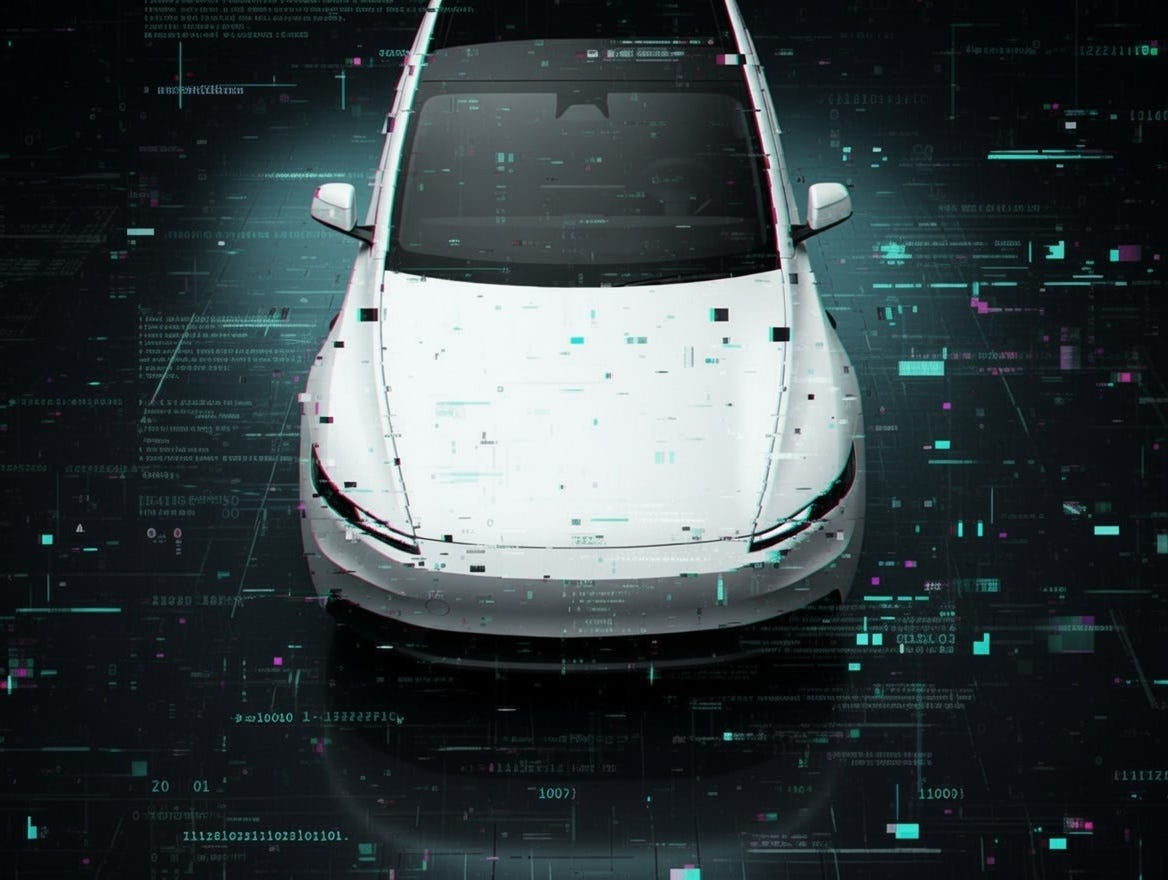
How FSD Works
Somewhere around 36-60 times a second (depending on the camera), your car looks at the road around you through eight different cameras. It then converts that information into data and sends it to a neural network. It sees 360 degrees, far beyond human peripheral vision, without fatigue or distraction. The car looks forward, backwards and sideways, it looks near you and up to its maximum visual range. It makes a decision on where to go, continuously.
Can you pay attention to the road, dozens of times each second, for the duration of your entire trip? Can you look behind you, next to you, and ahead of, process all the information, and make a split second decision, and then execute it?
That thought alone should make you understand that a computer is a much better driver than you are because it is able to look everywhere all at the same time, continuously without getting tired, without getting distracted, without getting annoyed. It doesn’t eat, it doesn’t talk on the phone, it does not deal with the kids in the back seat. The computer just does one job, and it does it perfectly.
Here’s another fun fact (I think?). The car does not actually think about the objects on the road. It doesn’t know what a pedestrian is, or what a stop sign is, what a traffic light is. It doesn’t concern itself with “an aggressive redneck” or a “slow grandma.” The computer has 10 years of training data to know how to behave around those objects, and it just quietly responds to the data. What you see on the screen, a visualization of the road, the people, the signs, that’s just a parallel process which displays that data for humans; the car doesn’t care.
You could say that FSD isn’t flawless yet, and it’s true, there are very minor edge cases. AI is still learning from billions of real-world miles. In Austin and in San Francisco though Tesla Robocab is able to operate fully autonomously, so we know the technology is nearly there. In case of Robotaxi, a remote employee could help out in case of a real challenge, but in case of FSD in my car, the worst thing that could happen is my car would ask me to take control. The difference is, in my car I could spend 99.99999% of the time without really engaging in driving, while non-FSD drivers spend 100% of their time driving.
Why are the humans so afraid of AI?
So why is it slightly freaky for my wife to engage in self driving, if the self driving is so unbelievably good? It’s the human nature!
When we drive ourselves, with hands and feet, we do certain things that we’ve learned to do in order to make our driving better in relation to other human. When you see a red light ahead you, you might slow down. When you see a truck merging in the lane next to you, you might give it space. When you see a car slightly swerving in the lane next to you, you might pull away just in case…etc. We do many little things like this because we’ve learned it helps us drive safer, but the car does not care.
The self-driving car just wants to know if it can make the right move in this moment of time. It doesn’t need to move away from another car, if it does not need to avoid it, but if thinks that it needs to avoid it, it moves over quickly!
The coolest part? Tesla AI didn’t learn any of these things because someone sat down to teach it, to explain what was right and what was wrong. AI just watched years of driving data, and learned to follow along.
You see where I am going here?
AI Takeover
We are at the very-very beginning of what is possible. The AIs are going to take over every single industry. As long as there’s data on what is right and what is wrong, that AI will figure it out, and it will get better and better at doing those things, until it’s doing them perfectly.
This isn’t just about driving. AI is already transforming:
Healthcare: Models like those from Google DeepMind analyze scans faster than radiologists, spotting cancers with superhuman accuracy from vast image datasets.
Finance: Algorithms trade stocks in microseconds, learning from market history to predict trends better than any human analyst.
Creative Fields: Tools like Midjourney generate art from text prompts, trained on billions of images, challenging artists to collaborate rather than compete.
Code: Claude Code and tools like it are making it possible to create in days what would previously take many months.
In each case, AI excels where there’s abundant data to learn from.
You can either fight this idea and pretend that it’s not going to happen, or embrace it, and plan for the vibrant future where mostly everything that used to be done by humans is now done by AI.
To embrace AI , you must let go of ego.
Letting go of ego means recognizing AI as a tool, not a threat. For my wife, it’s unlearning those micro-adjustments we’ve honed over years of driving. In the workforce, it’s similar. Great coders, for example, might fear AI writing code, but the winners will use it to amplify their ideas. Resistance often stems from job fears or loss of control, but overcoming it starts with using AI in your own life.
Audit your day, or your job. What tasks are data-driven and repetitive? Delegate them to AI and focus on creative, human elements. Try FSD if you have a Tesla, or explore free AI tools like Grok for problem-solving.
It’s really simple to be afraid, and to resist, and to worry. Making yourself useful in the AI future will require hard work, just like before, but now that work can be amplified many times over.
We’ve all go an enormous power on our hands. Use it.
p.s. This post is brought to you by Postal, a todo app nobody’s dream off. 🙀