


When we lived in Breckenridge, a small mountain town in Colorado, we learned one very important lesson: when in Rome, you gotta do like the Romans do.
In Breckenridge, my kids were enrolled in the local dance program, and not to be too rough on it, but the dance program really sucked. Hear me out!
It wasn’t their fault. When you live in a small mountain town, you don’t really know what good dance looks like. There’s no Juilliard. There’s nothing to be inspired by, or to aspire to. You don’t have students that want to be great dancers, nor do you have the teachers that were; the parents just send their kids for an after school activity, just to get them out of the house.
The environment can make or break your chances.
At the same time, if you were in Breckenridge to ski and snowboard, you didn’t even have to be particularly good to still look amazing on the national level. When you spend four or five days a week on the mountain skiing and snowboarding with the best people in the country who are there to do just that, you learn by osmosis, you get pushed to extremes, and in the process, you get better, and better.
Why am I talking about dance? We are in the AI arms race.
Everyone in software is competing to win the few positions that will be left remaining when AI completely upends the world. Given my previous analogy, it simply does not make sense to try and compete in dance, when everyone is there to fight for the gold medal in snowboarding.
In case of AI, everyone’s out to dominate, and they are not going to take it easy.
Work as we know it is going away
Tomorrow might come in six months or in six years, but soon whatever it is you’re doing will be completely overtaken by AI. Having been deep in AI psychosis for the past year, I cannot name a thing that cannot be automated.
Either your computer is going to do <the thing>, or a robot controlled by a computer will do it. The typical defense of: “The plumbers and roofers are safe because it’s a physical blue-collar job”, it’s all bullsh*t.
The only reason we use people for certain jobs right now is because people are cheaper to hire than robots. I can hire plumber Jake for $50 an hour, it’s still cheaper than building an autonomous robot to do that work; for now.
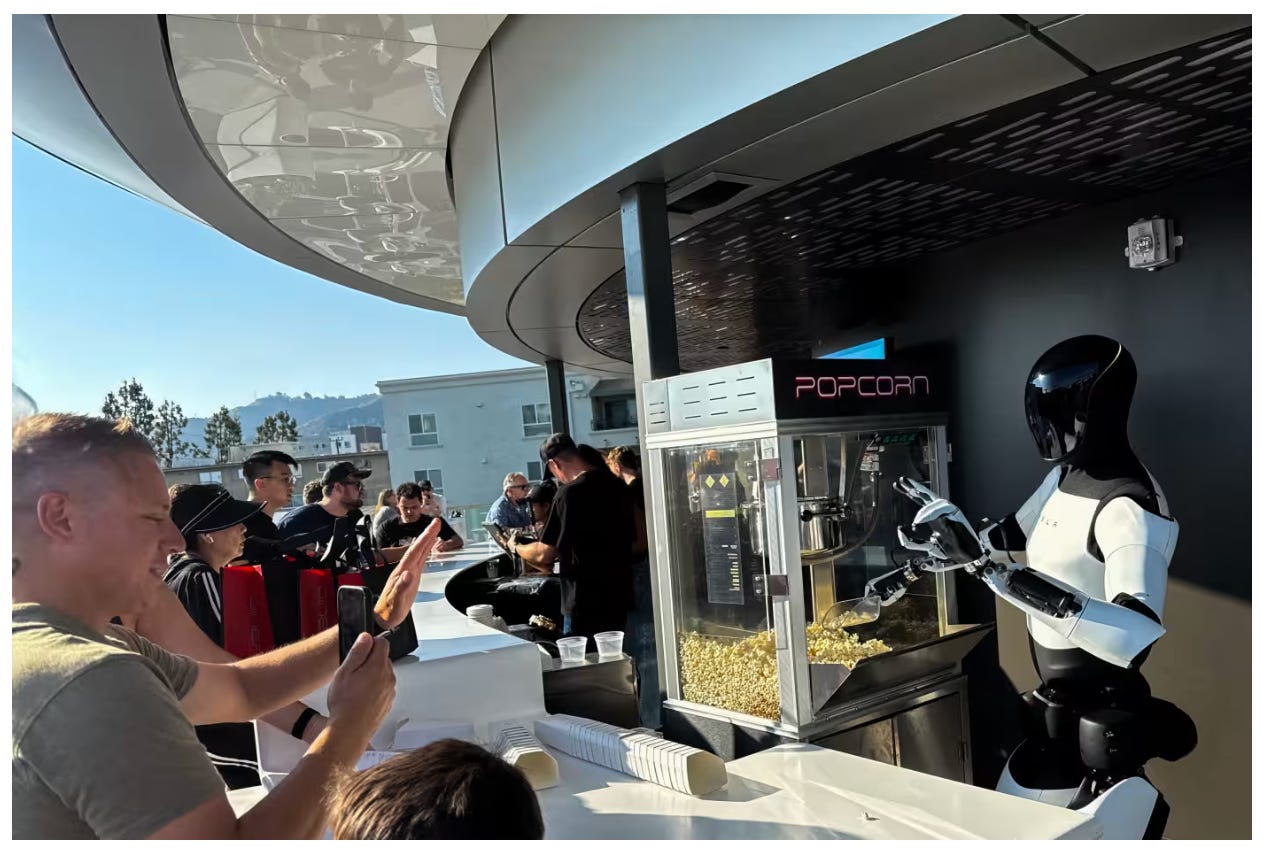
Today, we need robots to assemble cars in factories and to fight wars more than we need them to do household chores, or manual labor. Plumber Jake is safe for a while. It’s not because of his skill or because it’s his choice. It’s simple economics.
It’s a morbid thought in a way because nothing about that sounds happy and pleasant, unless, of course, you’re really, really into the process of building this future (haayo!).
Automate your business before it’s too late
All right, so that brings me to my next thought. Do you need anything to be automated in your life or business?
Here are a dozen obvious job functions humans perform daily that modern AI (especially local agents like those in Postal) already handles far more consistently, quickly, and cheaply:
Answering phones, routing calls, and handling basic customer inquiries
Writing, replying to, summarizing, and organizing emails
Scheduling meetings, managing calendars, and sending reminders
Data entry, spreadsheet maintenance, and database updates
Generating reports, analytics summaries, and performance dashboards
Basic customer support, ticketing, and FAQ responses
Creating and scheduling social media posts and engagement replies
Researching topics, compiling information, and synthesizing notes
Transcribing meetings, calls, and generating action items
Bookkeeping, invoicing, expense tracking, and simple accounting
Drafting contracts, authorization letters, proposals, and routine documents
Daily planning, itinerary creation, task prioritization, and follow-ups
In an ideal world, I would be spending all my time on Postal. I’d have a small team of cracked engineers and designer, and together we’d find the next breakthrough in AI. It would be like the NeXT company, a bunch of strange brilliant weirdos, working on a black cube. Nobody understands, until they do.
We don’t live in an ideal world though, and I need money.
So, let’s find it? Some of you here have businesses, and you need to make them better, but you don’t have the tens of millions to hire McKinsey, so they could type commands into Claude Code for you ... But you know that AI is coming, and if you don’t embrace it now, you will be fck*ed. If that’s you, we should talk.
I mean, show me 10 people in your company, and I’ll find a way to make them all go away, replaced by AI. It doesn’t really matter what they do, it’s all the same to a computer.
How to Survive: The Economics of Repetitive Automation
The real differentiator isn’t whether a task can be automated — it’s whether automation makes economic sense in the long-term.
Replacing a $300k/year senior engineer with a one-time $20,000 GPU is an obvious win. The GPU pays for itself quickly and then delivers that work in perpetuity at essentially zero marginal cost. No salary, no benefits, no turnover, no cloud bills. But can you do that, or do you need $2M worth of GPUs, and a datacenter?
Replacing a $75k customer-service rep with $2,000 per months in API calls to Claude, GPT, or similar seems reasonable, but what if the cost is $2,000 per week? It quickly becomes more expensive than the human. Which one do you choose then, the AI or the human?
We are not quite at the time where a computer does everything for you.
A computer can do a lot, but it’s best in focused tasks. Repetitive daily work — email triage, scheduling, reporting, research, document drafting, data entry, calendar management — all that becomes near-zero marginal cost after the initial investment. Repetitive work is also the best type of work to make go away.
Humans can remain, we like humans sometimes, but we should also spend our days doing stuff that moves the world forward. Repetitive work rarely does.
I honestly don’t know who survives the AI apocalypse. Someone has to have the money to pay for all the things in the world. Where does the money come from, when everyone’s unemployed? I don’t know.
What I do know is that the survivors will find a way, but if you haven’t started looking, the best time to do so is now. Tomorrow will be too late.
Good night!
— Kirill Zubovsky
Some things you should read after this:
VIBE CODING is a terrible name. Some people just throw code against the wall and hope it sticks; most often it doesn’t. The rest of us know how to code, and we use AI to augment ourselves. The AI does the boring bits, we do the rest.
X/Twitter. If you’ve been on X since the beginning of Twitter, you might have to take steps to make your timeline better. The kids don’t know what it was like back then, so they have no incentives to make the new algo work for you.
Are we in a simulation? You probably should know.


